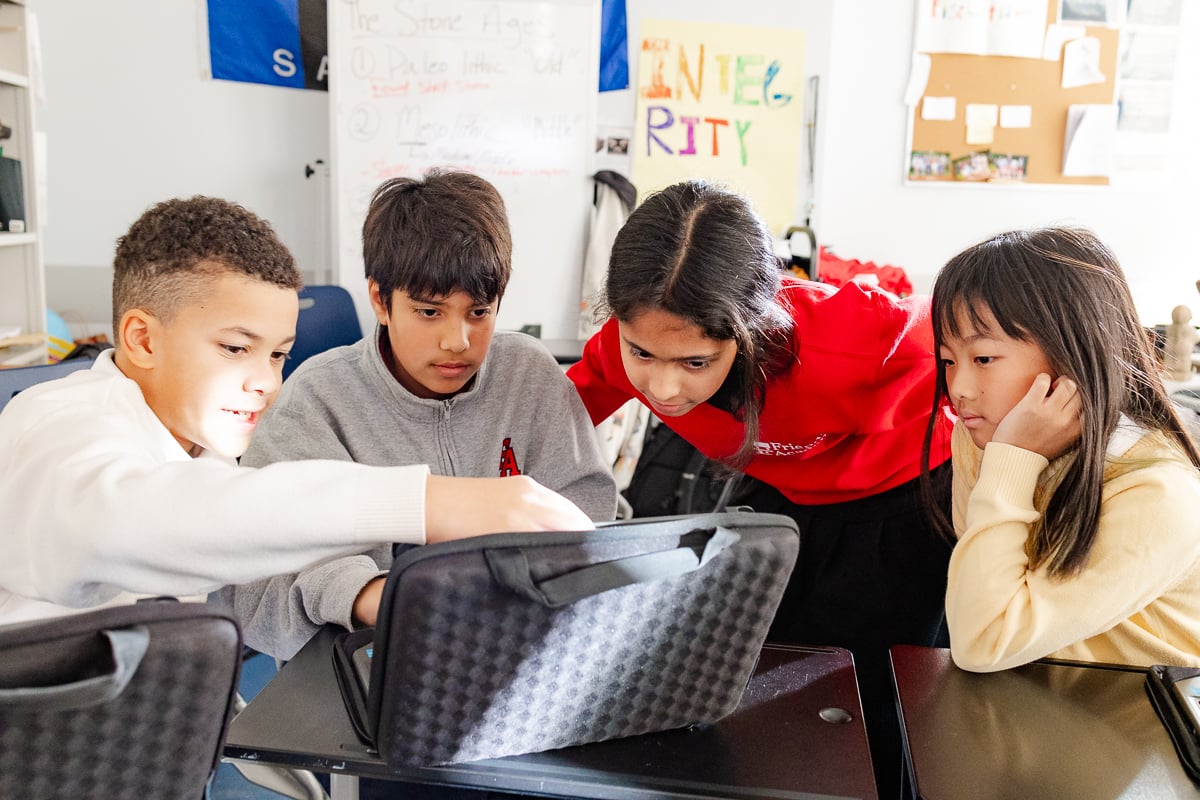
After one class last fall, a handful of fifth-graders sought out their teacher to speak their truths and set the record straight. They didn’t want Mr. Chris Fischetti getting any wrong ideas. From their points of view, there was zero room for confusion.
These students had just wrapped up their final project in Speech and Debate, a new course introduced in September at Friends Academy’s Middle School. And they nailed it, making a strong case for their negative side of the debate that students should not be allowed to have snacks in school.
Afterwards, they made sure to tell Mr. Fischetti how they truly felt: “We don’t believe anything we just said! We absolutely need snacks in school!”
“You guys convinced me,” Mr. Fischetti told them with a laugh. “I believed you were against having snacks in school.”
Fortunately for all Middle School students, these were not formal policy debates but the culmination of a quarter-long class that all fifth- and sixth-graders are required to take as part of the humanities curriculum.
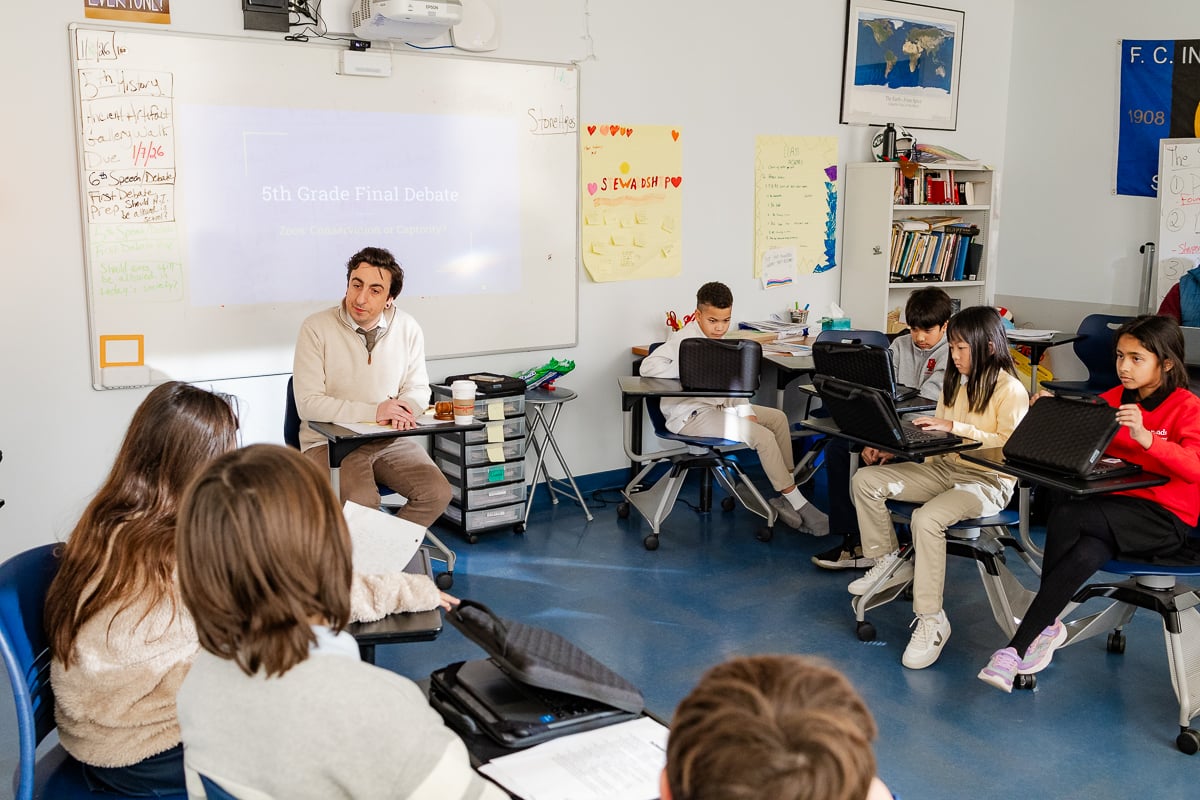
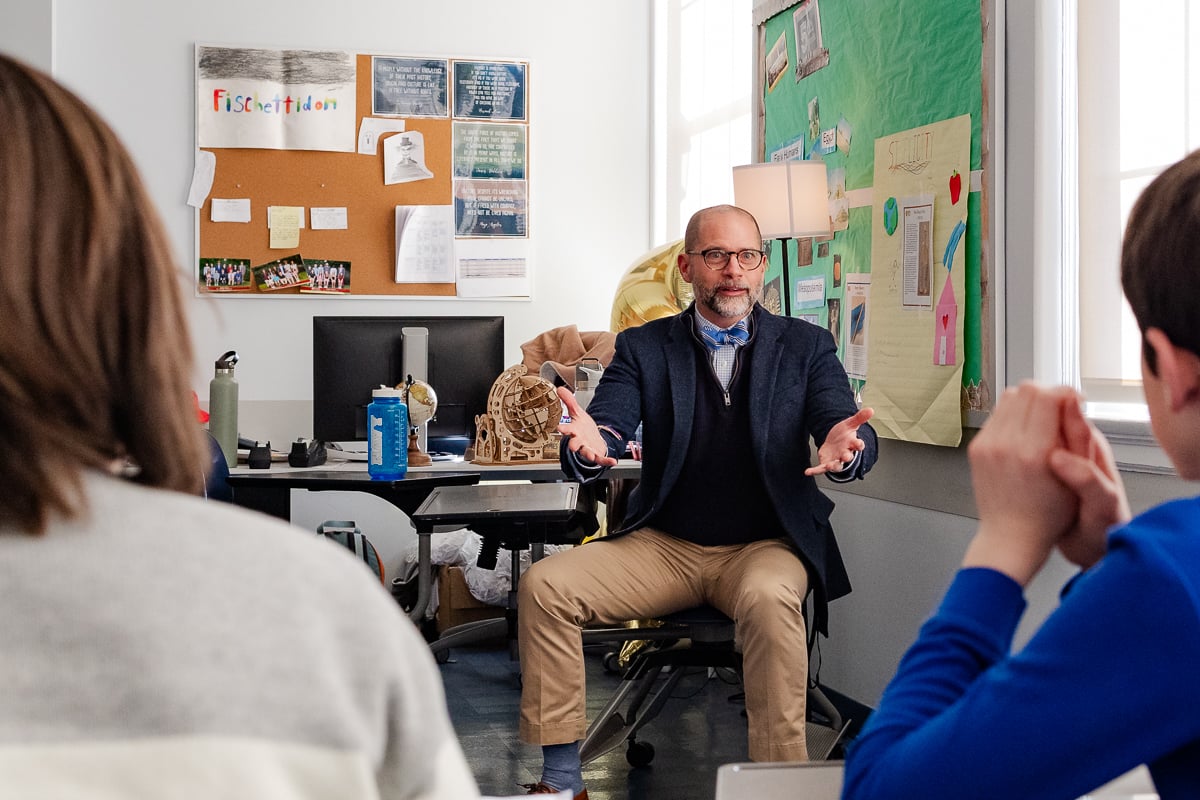
“One of the biggest wins from this class is public speaking and kids learning to present ideas in front of their peers,” says Mr. Fischetti, a history teacher (pictured above). “The other is that they’re learning how to make arguments, especially arguments for something they may not agree with or believe in. They’re learning how to frame issues, see multiple sides of a problem, and make cases for potential solutions to those problems.”
At the end of the second quarter, a new group of fifth-graders took on a different final debate topic: Conservation or captivity, should zoos exist?
In rebuttal, the affirmative side moved to corner the negative side, which had argued that zoos were not good for animals because there were historical examples of animals being harmed by circuses. From the affirmative side, students took turns hammering the point that zoos are not circuses and what happened a long time ago also doesn’t matter because the conditions are now different.
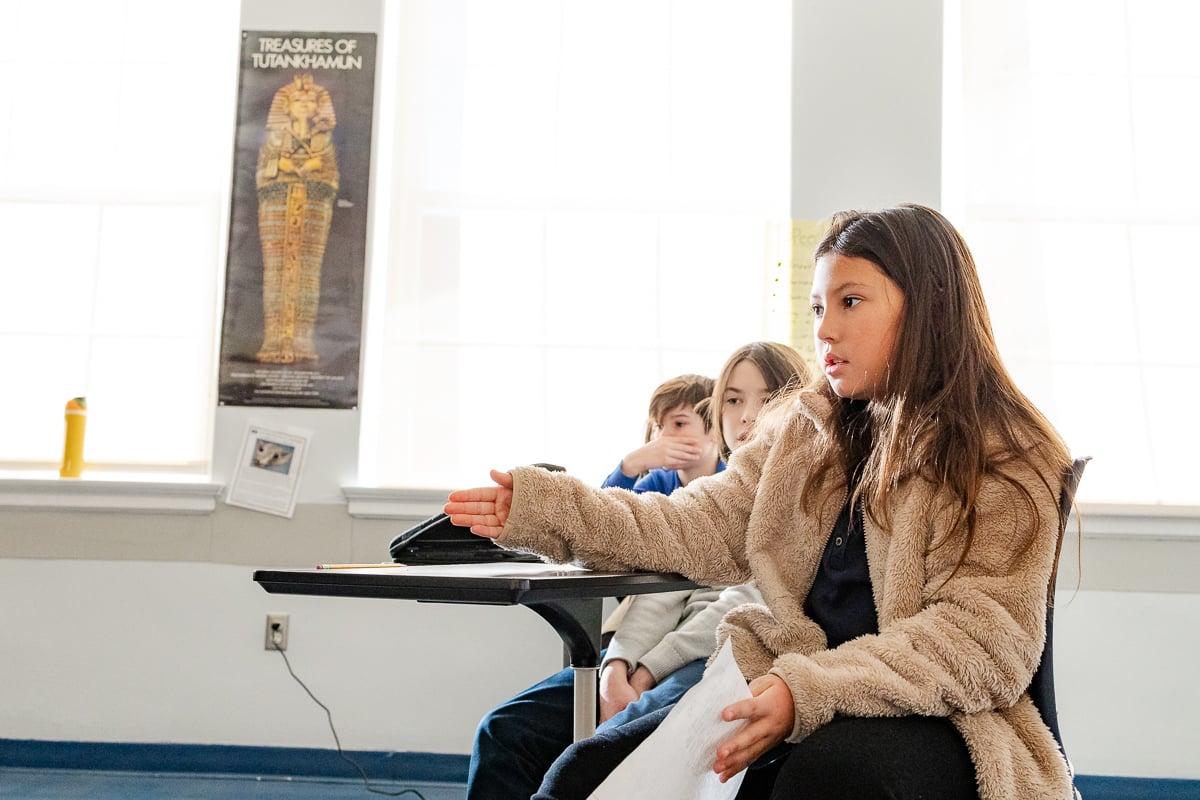
After both sides rested, the floor was given to Lower and Middle School principal Mr. Alfred (Rik) F. Dugan III, who sat in neutral territory while the teams faced off across the room.
“I am so proud of all of you. That was so impressive,” he said, turning from side to side to acknowledge both teams. “Your ability to think before you speak, to speak so eloquently, to think about each other’s argument and case, and then understand the process of debate — these are all skills that are going to increase your capacity as leaders.”
Mr. Fischetti did not declare a winner — that wasn’t the goal — but the debate was so pointed that Mr. Dugan (pictured below) couldn’t help but lean into the fray at the end.
“This is an ethical dilemma for me personally,” he told the students. “I would never want to see an animal hurt, in any way. And not only do I enjoy zoos, but I do believe that zoos bring animals closer to humans — that maybe zoos will inspire people to help animals out in the wild and preserve them. But now I’m torn, and that means both teams did such a great job because you’ve made my understanding of the issue even more difficult. I’m grateful I was able to observe.”
The outcomes of particular debates are hardly the point of adding Speech and Debate to the curriculum. What matters most is already sprouting up: students are utilizing their speech and debate skills in other classes.
“I've seen what they’re learning in here translate to my history classes,” Mr. Fischetti says. “Especially their confidence; that has been boosted exponentially.”
At the start of each quarter, new Speech and Debate classes focus on speeches (informational, impromptu, persuasive) before turning to debates. Mr. Fischetti must approve every topic, but students are encouraged to lean into what they love. One of the most memorable speeches to date was about Minecraft.
“The student was enthusiastic about it,” Mr. Fischetti says. “Students get a lot more freedom in this class than they might have in math, English, science or history. When they have that agency and feel ownership over their ideas, they’re able to deliver their speeches with excitement and passion.”
The reason for adding this class to the curriculum, and why it might expand to all grades in the Middle School in the future?
“Communication is one of the critical competencies, if not the critical competency of our time,” Mr. Dugan says. “Developing that in young people at a formative age — so students can learn how to think and reflect and then articulate points of view, and simultaneously be compelled to listen and learn and research other points of view — is crucial to help them become critical thinkers and informed citizens of the world.”
Photography by Alvin Caal / Friends Academy
Download Premium
Lorem ipsum dolor sit amet, consectetur adipiscing elit, sed do eiusmod tempor incididunt ut labore et dolore magna aliqua.