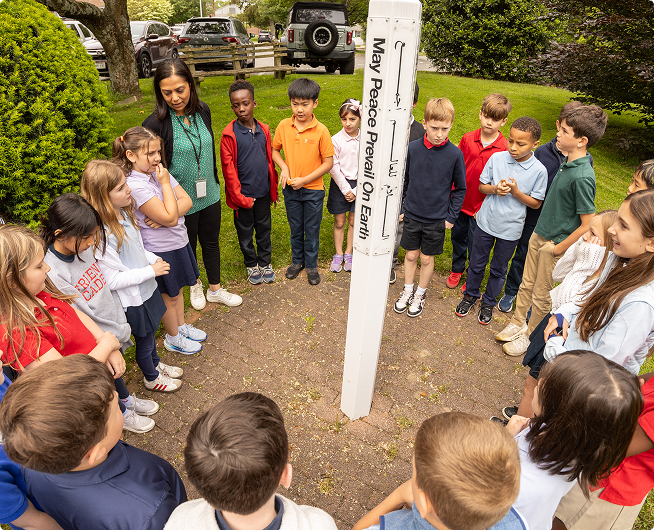
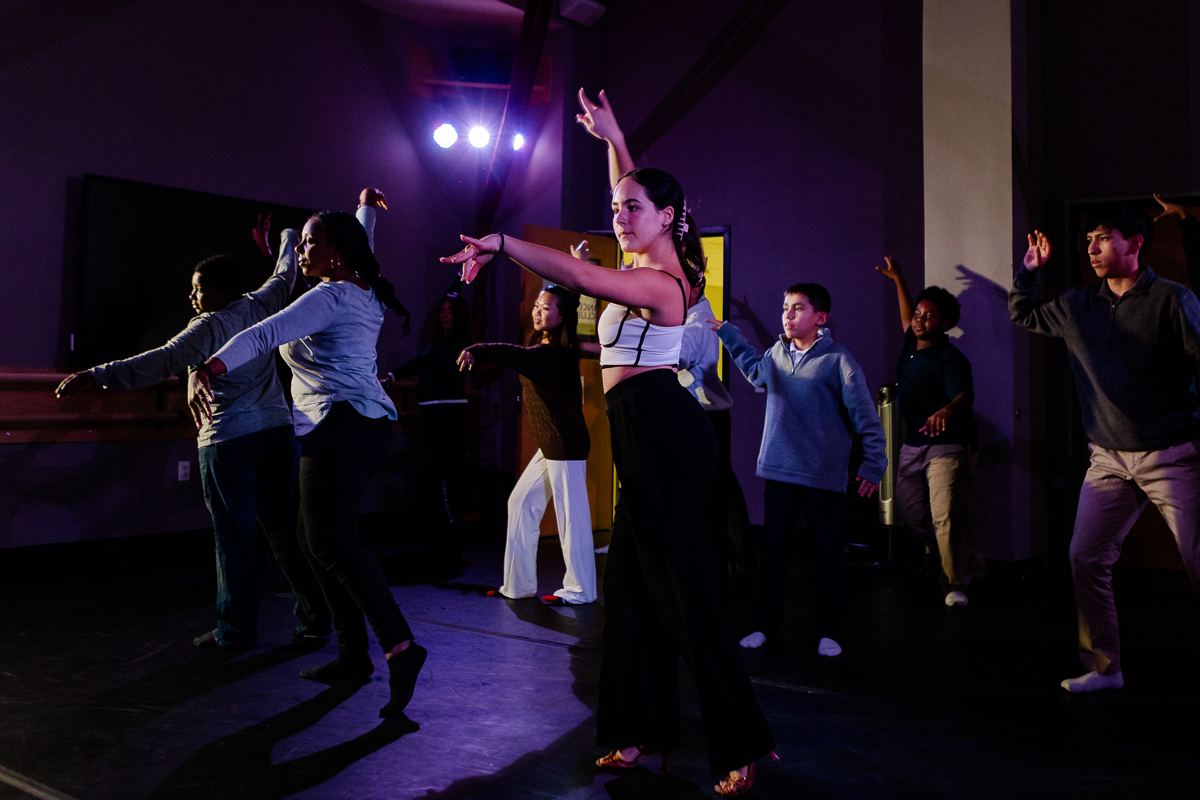
At Friends Academy, we are inspired by the goodness that we know exists in every young person we have the gift of educating in our Quaker school community.
"We accept the job of creating the conditions that each young person in our community needs in order to thrive throughout their academic journey. Focusing on equity supports us in creating a unique experience for each and every child who walks through our doors."
Nailah Moonsammy Director of Diversity, Equity, and InclusionHeard, Known – Valued
The most important piece of our diversity, equity, and inclusion work is ensuring every student experiences a true sense of belonging.
We are committed to cultivating a diverse, equitable, and inclusive educational environment for every member of our community by:
- Presenting students with learning opportunities focused on: positive identity formation, norm-setting, civic engagement, community-building, and leadership skill development
- Uplifting and amplifying student voice, particularly with respect to any/all of the following identifiers that may pose a challenge for a student seeking a true sense of belonging as it relates to their: ability, ethnicity, family structure, gender identity, language, race, religion/spirituality, sexual orientation, socioeconomic status
- Empowering faculty in implementing pedagogical methods that inform and support an inclusive pedagogy.
Diversity
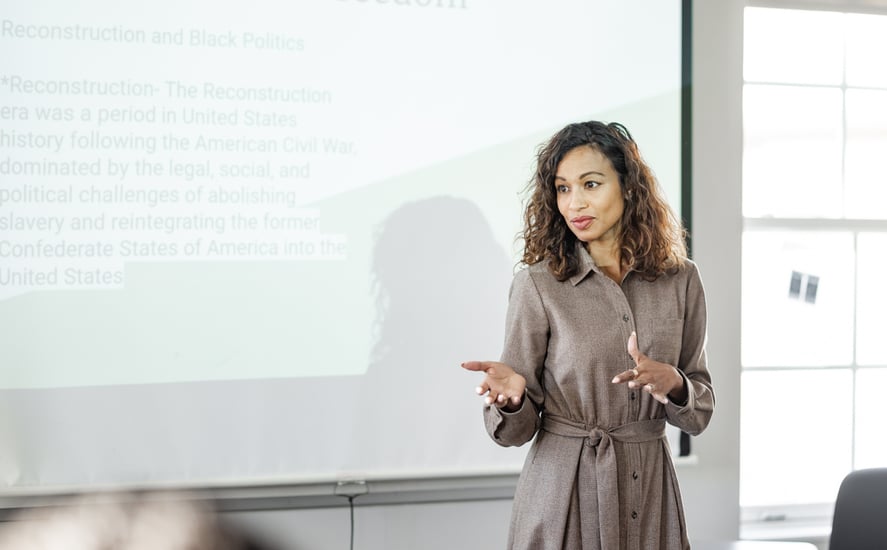
At our Quaker school, diversity means that across our community you can see the beautiful mosaic of differences represented in our many identities.
What does diversity work examine?
- representation
- categories
- differences
Diversity asks the question:
"Who is in the room?"
Equity
Our equity work is modeled in our attention to the unique needs of every member of our community — unique to their identity and lived experiences and ensuring that they receive what they need to have happy, healthy, and successful lives.
What does equity work examine?
- systems and structures
- access
- needs
Equity asks the question:
"How can we open the door to everyone?"
Inclusion
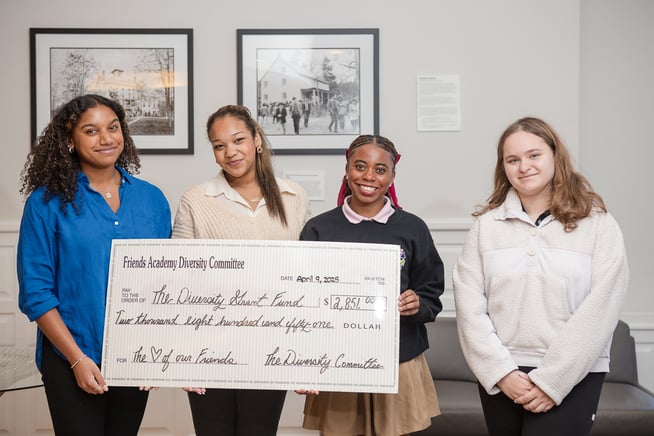
Our commitment to inclusion lives in the collection of our student alliances and affinity groups throughout our Quaker Student Life Program.
What does inclusion work examine?
- belonging
- voice
- feeling welcomed
Inclusion asks the question:
"Has everyone been heard?"
This framework of posing questions/answers, through the different DEI perspectives/lenses, is inspired by the research and work of Dr. D-L Stewart. Our intention in using it is to give all community members access to what we mean when we discuss DEI within the context of our Quaker school.
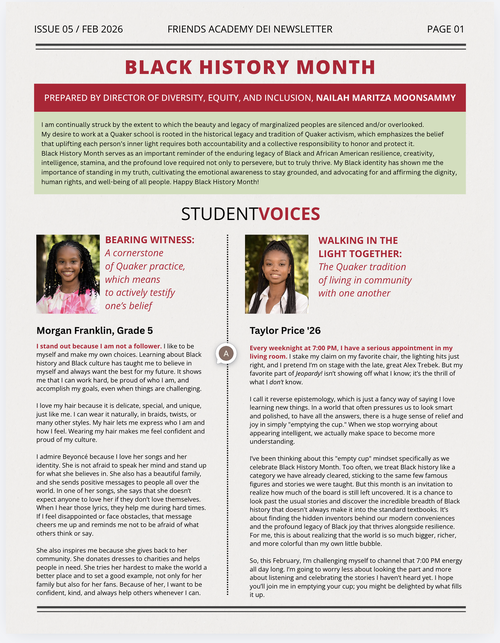
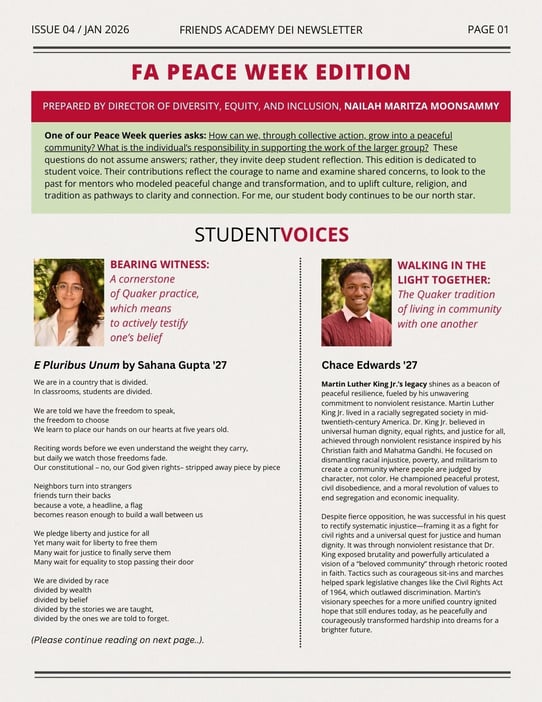
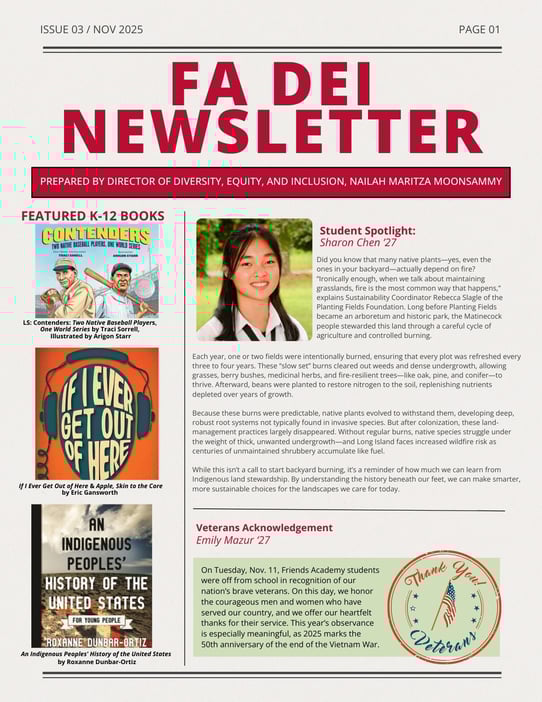
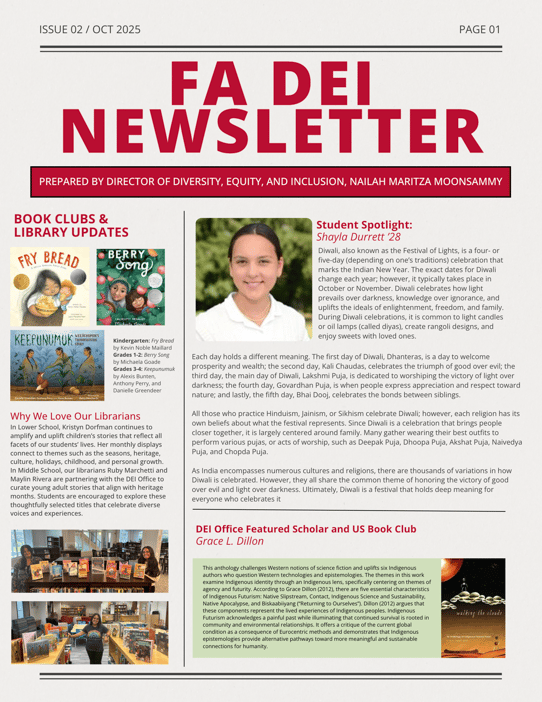
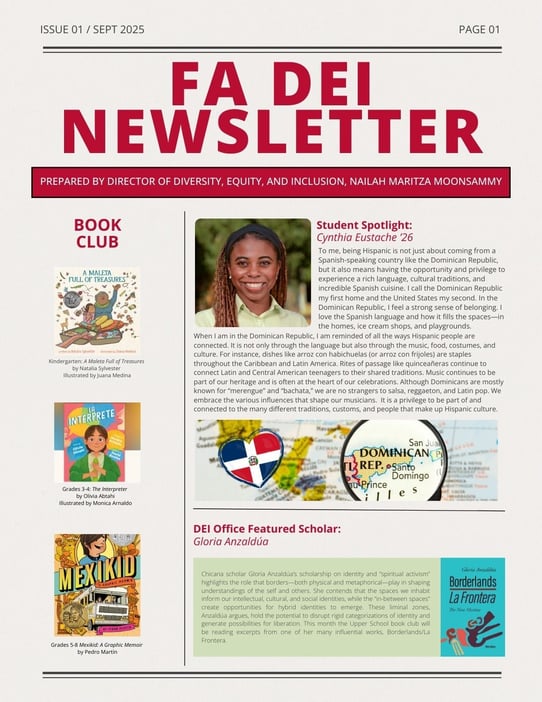
The DEI Newsletter
Dedicated to uplifting student voice, the DEI Newsletter is published seven times a year.
DEI Initiatives
What's the Difference?
Affinity Groups bring together people who have a shared identifier (e.g. gender, family structure, religion, and many others). Within an affinity group, a member can speak to the experiences of being a member of the group from the "I" perspective. Affinity groups provide affirmation, emotional comfort, and community.
Alliance Groups bring together those who want to support and stand in solidarity with people in underrepresented communities. Alliance groups focus on member education, advocacy, and action.
What's Next?
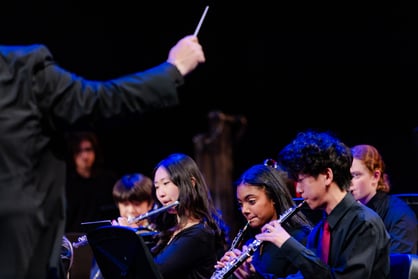
As we examine what’s next for Friends Academy, we are mindful of allowing our Quaker testimonies to guide us deeper into this space of reflection. With a long-term vision of being a school where the work of diversity, equity, and inclusion is fully integrated into our five strands below, our list of short-term goals is extensive. Rather than take a posture of reactivity, we are choosing to slow down to speed up. We will continue to listen to the voices of our students and families. We will continue to partner with key influencers and thought-leaders to learn all we can. We are here to do this work in ways that honor the full identities of members in our community while making mission-aligned, value-centered, and sustainable change.
Friends Academy educators, believe that every student possesses personal and cultural strengths, achievements worthy of celebration, and the intellectual capacity for academic success. Our educational philosophy embraces a pedagogical approach that places Social and Emotional Learning (SEL) and Culturally Responsive Classroom (CRC) at the core of instruction. We are committed to providing students with an educational experience that nurtures character development, emotional intelligence, intellectual curiosity, and holistic growth. Our curriculum is designed to integrate canonical and traditional bodies of knowledge with nontraditional knowledge systems, fostering critical inquiry and ensuring that our students are well-prepared to engage in meaningful academic discourse at the collegiate level.
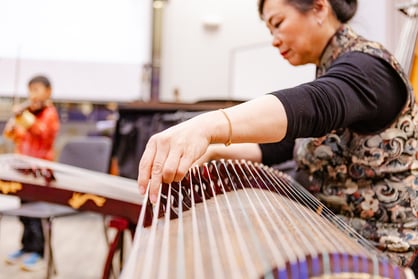
The DEI programs focus on three core elements: community building and engagement, cultural exchange and awareness, and education. Events such as Holidays with Friends and Family Night highlight our commitment to celebrating cultural traditions and heritage as a community. The DEIJ Parent Group provides a platform for parents invested in this work to partner with the school in examining and advocating for diversity, equity, inclusion, and justice practices. Student affinity groups offer spaces for connection through shared experiences, fostering both a stronger sense of self and a deeper sense of belonging. The Cultural Symposium serves as a forum for educators, parents, and students to engage in dialogue that directly connects to educational inquiry.
All new faculty and staff participate in a DEI onboarding experience designed to introduce what diversity, equity, and inclusion mean within our Quaker school community and how to partner effectively with our DEI office. The onboarding begins by connecting DEI work to the Quaker testimony of equality and equity. New colleagues engage in a reflective process to examine how their own identities shape their instructional approaches. This practice is essential for developing identity literacy skills, a critical foundation for creating inclusive learning environments.
Professional development for current faculty is ongoing. The DEI office actively engages with current and emerging educational research in areas such as curriculum, student engagement, instructional activities, and assessment. We then partner with faculty and staff to identify PD opportunities that will best support the work of our educators. Recognizing that education is dynamic, we embrace a multidimensional approach to content and instruction. While SEL and Culturally Responsive Classroom (CRC) remain foundational practices, we also draw on collaborative efforts and best-practice models across our institution to continually strengthen our work.
We believe that the relationships we build with our families form the culture we create. Our goal is to foster an educational space that values and cares for every member of our community. Guided by our Quaker mission, we understand that being open, inclusive, and supportive lies at the heart of who we are. We are committed to cultivating a more diverse and representative school community, one that inspires students to work together and grow into the inclusive leaders our world needs. Real-world understanding is the foundation of our teaching and learning, and it is an essential competency for success in all careers and in life.
All-School Family Programs Series
Holidays with Friends
An evening of holiday music, visual art, and faith exchange between our families.
FAmily Night
Our international potluck kicks off this yearly night of fellowship and learning with workshops like Quaker activism, Latin Ballroom dancing, Mindfulness, and more.
How Quakerism Creates a Culture of Acceptance
Guided by our Quaker values, Friends Academy has created a culture that values diversity, acceptance, understanding, and the importance of human connection. Explore our guide, Understanding Quakerism as a Non-Quaker, to learn more about our guiding principles and how our students live and practice these values every day.